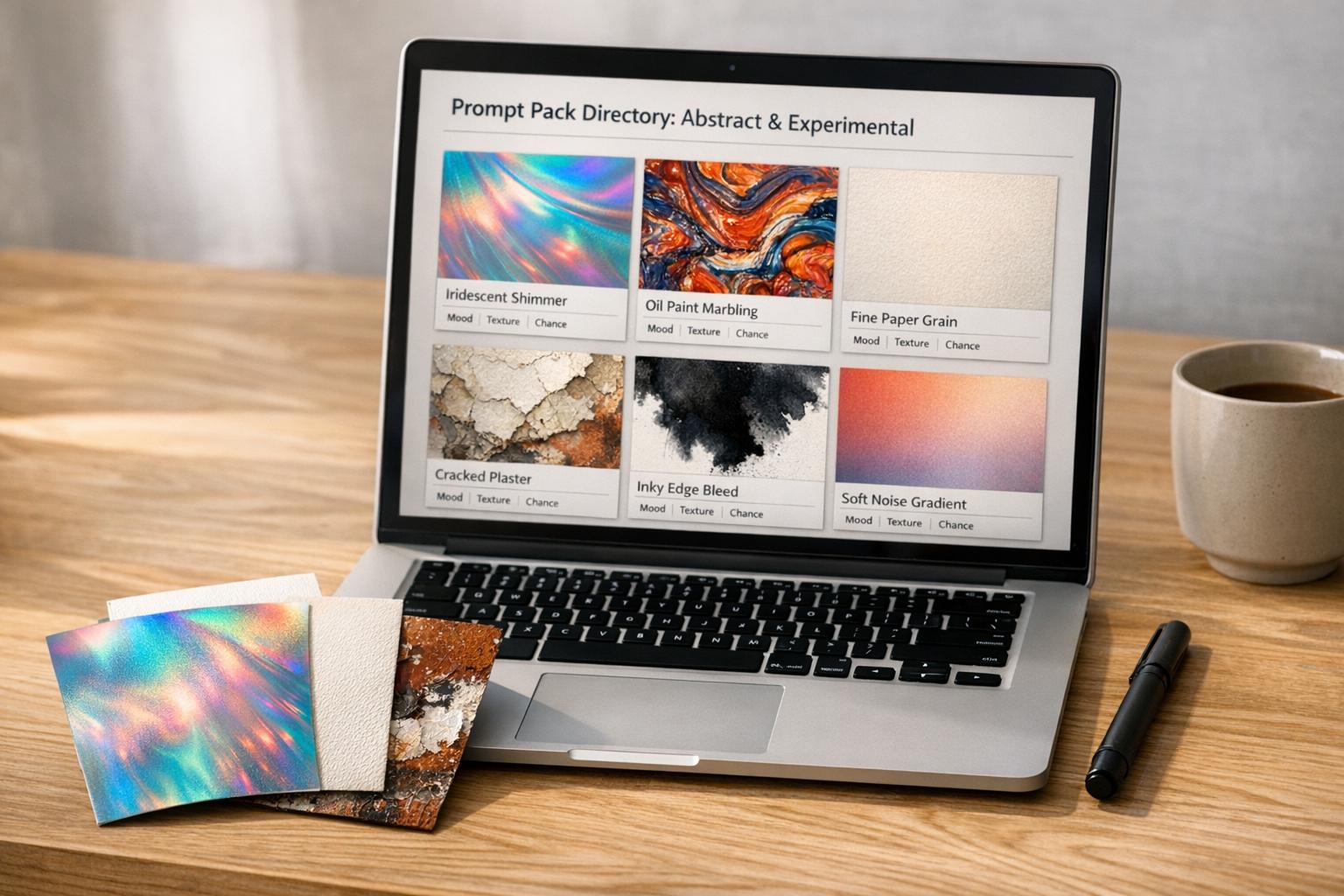
If you're tired of AI visuals that feel bland or disconnected from your brand, the right art style can make all the difference. In 2026, marketers are focusing on styles that align with their goals, audience, and platforms. Whether you're creating Instagram ads, YouTube thumbnails, or email headers, professional prompt packs help you produce polished visuals faster and more consistently. This guide dives into eight art styles, their best use cases, and how curated prompt packs can simplify your workflow while keeping your visuals on-brand.
Why AI Art Style Matters for Marketing Visuals in 2026
By 2026, the challenge for marketers isn’t just creating content - it’s standing out in a sea of generic visuals. The key to making your marketing visuals memorable and professional lies in selecting a distinct style that aligns with both your brand’s goals and the platforms you’re targeting. As Cemhan Biricik from ZSky AI explains:
"Knowing which style to use, how to describe it in your prompt, and what each style works best for is the difference between mediocre outputs and stunning, professional-quality images" [3].
Different styles cater to different marketing needs. For instance, photorealistic visuals can replace traditional stock photos and product shoots, offering a polished alternative. Meanwhile, flat illustration has become a go-to for SaaS companies due to its clean and modern aesthetic [1]. Emotional resonance is also critical - styles like moody Neon Noir can craft a cinematic feel for lifestyle brands, while playful Kawaii designs are perfect for promoting items like journals or tote bags [5].
Selecting the right style is crucial for building a cohesive brand identity. Consistency across all platforms - whether it’s Instagram posts, email headers, or website banners - makes a brand instantly recognizable. This is where tools like photography-focused prompt packs, illustration and abstract styles, and video-first visuals come into play. These packs provide carefully crafted formulas with technical details like focal lengths, lighting setups, and color schemes, ensuring every piece of content stays on-brand [2].
To combat bland, uninspired outputs, structured workflows built around prompt packs can cut content creation time by as much as 70% [6]. This allows marketers to batch-produce a week’s worth of visuals in a single session, all while maintaining a polished, professional appearance. Prompt packs are the foundation of an efficient, repeatable system for creating standout brand visuals.
sbb-itb-997826f
How to Match AI Art Styles to Marketing Channels
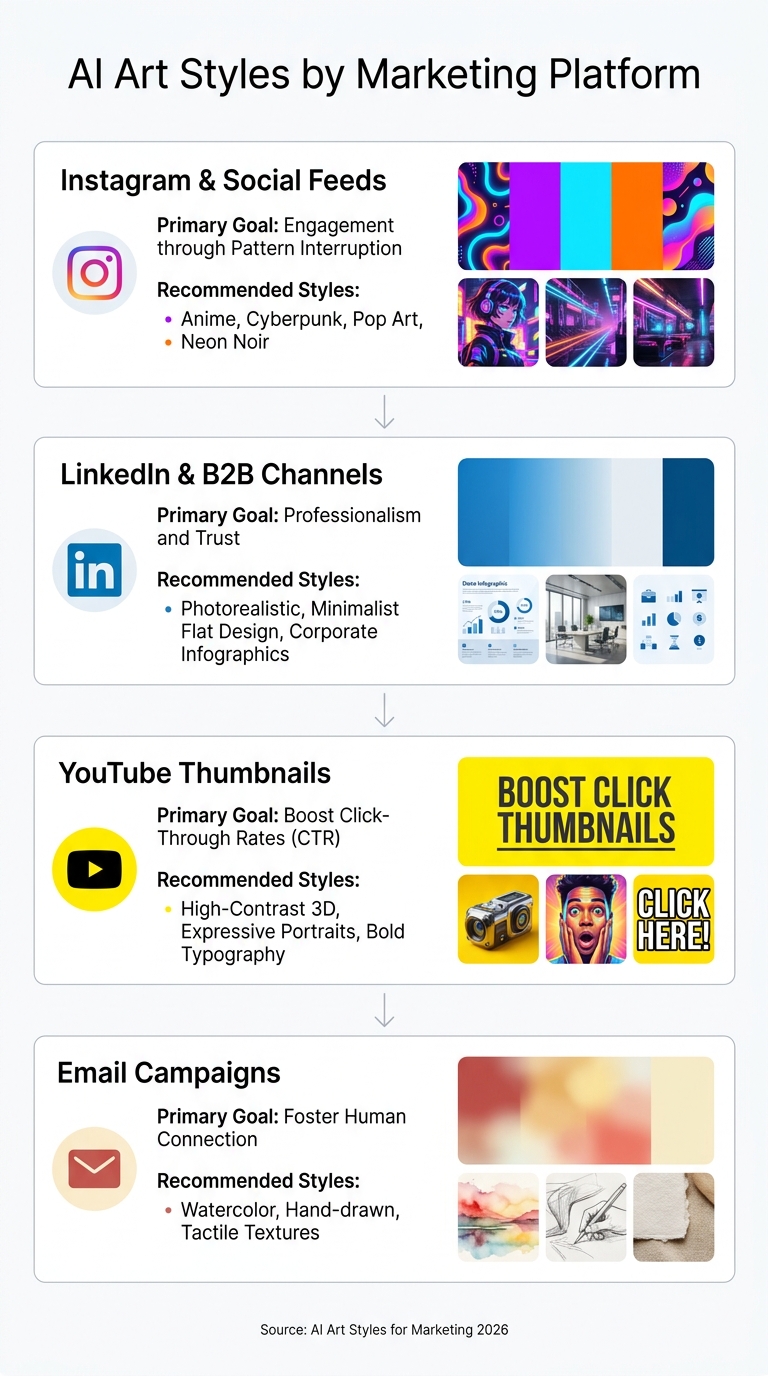
AI Art Styles by Marketing Platform: Best Practices Guide 2026
Selecting the right visual style for each platform can make your marketing efforts far more effective. Platforms like Instagram thrive on bold, eye-catching imagery, while LinkedIn audiences tend to prefer a polished, professional aesthetic. YouTube thumbnails call for expressive visuals that grab attention, and email visuals work best when they feel warm and personal. The key is aligning your visuals with the behaviors and preferences of each audience.
Here’s how to pair styles with specific platforms for maximum engagement.
Pairing Styles with Channels
Instagram and social feeds excel with visuals that disrupt the norm, often referred to as "pattern interruption." High-energy styles such as Anime, Cyberpunk, Pop Art, and Neon Noir create striking contrasts that stand out in crowded feeds. For example, in January 2026, Visa collaborated with artists like Rafael Mayani (Canada) and Nathan (USA) to produce vibrant illustrations for its Global Art Collection during the 2026 FIFA World Cup. These visuals told compelling stories that stopped users mid-scroll [4].
LinkedIn and B2B channels require visuals that convey professionalism and trust. Photorealistic imagery and Minimalist Flat Design work well for SaaS branding, presentations, and whitepapers. A clean, tech-inspired look - featuring light blue-to-white gradients and simple sans-serif fonts - can effectively communicate authority and clarity.
YouTube thumbnails are all about grabbing clicks. High-contrast colors, expressive faces, and 3D elements like arrows or bold typography help create depth and focus. Think of bright yellow backgrounds paired with dark text to instantly draw attention.
Email campaigns benefit from softer styles that feel more personal. Watercolor, Hand-drawn, and Tactile Textures are particularly effective for building emotional connections without overwhelming the reader.
| Platform | Recommended AI Art Styles | Primary Goal |
|---|---|---|
| Anime, Cyberpunk, Pop Art, Neon Noir | Engagement through Pattern Interruption | |
| Photorealistic, Minimalist Flat Design, Corporate Infographics | Professionalism and Trust | |
| YouTube | High-Contrast 3D, Expressive Portraits, Bold Typography | Boost Click-Through Rates (CTR) |
| Watercolor, Hand-drawn, Tactile Textures | Foster Human Connection |
Let’s look at how prompt packs can simplify maintaining this multi-channel approach.
Using Prompt Packs for Cross-Channel Consistency
Prompt packs are a practical way to ensure your visuals stay consistent across platforms. Instead of crafting new prompts for every Instagram post, LinkedIn banner, or email header, a well-structured prompt pack lets you batch-create assets with uniform lighting, color schemes, and composition rules. By using a standardized formula - [Format] + [Subject] + [Style] + [Mood/Colors] + [Platform] + [Extra Details] - you can keep all your visuals on-brand.
For instance, photography-focused prompt packs include technical details like "50mm f/1.4" for depth of field, while illustration and abstract styles offer curated color palettes and negative prompts (e.g., "no clipart", "no busy backgrounds") to maintain quality and focus. This method can reduce content creation time by as much as 70% [6].
8 AI Art Styles for Marketing Content in 2026
Each of these styles offers a solution to specific marketing challenges - whether it’s building credibility, grabbing attention, or showcasing a forward-thinking image. The key is to align the style with your brand's objectives and audience preferences rather than simply choosing what looks appealing. These styles work seamlessly with specialized prompt packs, ensuring a cohesive and efficient visual strategy.
1. Photorealistic Product and Brand Photography
Photorealistic imagery can replace expensive photoshoots while maintaining a sense of authenticity. It’s perfect for product launches, email headers, and landing pages where realistic visuals build trust. Prompts that include camera-specific terms like "85mm f/1.4" or "studio lighting with softbox" help avoid generic stock-photo vibes [1][2].
For e-commerce platforms like Shopify, photography-focused prompt packs can help you achieve natural lighting, lifelike textures, and realistic depth of field.
When to skip it: If your brand identity leans towards playful or experimental, photorealistic imagery might feel too formal.
2. Authentic 'Imperfect' Photography
This style counters "AI fatigue" by mimicking candid, relatable moments. Think natural lighting through a window, slightly off-center framing, and unpolished compositions [1][5]. It’s ideal for Instagram Stories, behind-the-scenes content, and campaigns aiming for a more human connection.
To achieve this, use prompts like "candid moments" and "natural window light." This approach is especially effective for lifestyle brands, wellness companies, and businesses prioritizing emotional resonance over polished visuals.
When to skip it: Luxury or high-tech brands may find this style too casual or unrefined.
3. Clean Minimal Illustration and Flat Design
Minimal illustrations rely on simple shapes, limited colors, and bold use of negative space to simplify complex ideas [2][3]. They’re great for SaaS dashboards, infographics, email campaigns, and explainer videos where clarity is essential.
Include phrases like "bold negative space" in your prompts to avoid unnecessary visual clutter [2]. Illustration-focused prompt packs often include negative prompts like "no gradients" or "no 3D effects" to maintain a clean, flat look.
When to skip it: If your campaign requires high-energy visuals to grab attention, this style may feel too subdued.
4. Bold Pop Art and High-Contrast Visuals
Pop art is all about grabbing attention with bold outlines, halftone patterns, and vibrant primary colors [2][3]. It’s perfect for Instagram ads, YouTube thumbnails, and any campaign where standing out is critical.
Using terms like "Ben-Day dot pattern" in your prompts can help achieve that comic-book-inspired halftone effect [2]. This style is a hit for brands targeting younger audiences or running time-sensitive promotions that require a sense of urgency.
When to skip it: Industries like finance, legal, or healthcare may find this style too informal or flashy.
5. Retro and Nostalgia-Driven Visuals
Retro aesthetics like Synthwave and Vaporwave evoke 80s and 90s vibes with neon grids, chrome text, and pastel gradients [1][2]. These styles resonate with Gen Z and Millennials, making them ideal for throwback campaigns and vintage-inspired product launches.
While Synthwave leans more energetic with neon and chrome, Vaporwave offers a softer, dreamier look with pastel gradients and classical elements [2]. Both are excellent for print-on-demand designs, lifestyle branding, and shareable social media content.
When to skip it: If your brand's focus is on cutting-edge technology or modern professionalism, retro styles might feel out of place.
6. Cyberpunk and Futuristic Tech Visuals
Cyberpunk art features neon-lit cityscapes, rain-slicked streets, and holographic elements [1][3]. It’s a go-to choice for SaaS branding, cryptocurrency promotions, gaming campaigns, and tech products aiming to feel forward-thinking.
Start prompts with a setting like "rain-soaked Tokyo", add neon lighting, and include atmospheric details like "foggy reflections" [1]. This style is making a big comeback in 2026, especially for moody, cinematic social content [5].
When to skip it: Brands that focus on warmth or human connection may find cyberpunk imagery too cold or dystopian.
7. Cinematic and Video-First Thumbnails
Cinematic visuals are designed to boost click-through rates on platforms like YouTube, TikTok, and Instagram Reels. They often feature dramatic framing, volumetric lighting (like "god rays"), and high-contrast colors [2][6]. Bright yellow backgrounds paired with dark text and expressive cutouts enhance visibility and engagement.
For YouTube, high-energy layouts with bold typography and expressive facial cutouts are especially effective [6]. Video-focused prompt packs are tailored to improve thumbnail performance.
When to skip it: For email campaigns or LinkedIn posts, where subtlety and professionalism are more important than grabbing clicks.
8. Surreal and Dreamlike Imagery
Surreal art uses dream-like elements and fluid forms, making it ideal for creative campaigns and editorial content [1][2]. It’s especially effective for luxury branding and projects that prioritize imaginative storytelling over literal visuals.
For example, in January 2026, Hermès debuted their e-commerce site with illustrations by French artist Linda Merad. Her whimsical undersea designs introduced the theme "Venture beyond" (L'appel du large), showcasing how surreal visuals can create memorable brand experiences [4].
When to skip it: Avoid this style for e-commerce product pages or scenarios where clarity and trust are paramount.
| Marketing Use Case | Recommended AI Art Style | Key Benefit |
|---|---|---|
| E-commerce/Product | Photorealistic | Builds trust; replaces photoshoots |
| SaaS/Tech Branding | Flat Illustration / Cyberpunk | Signals modernity and clarity |
| Social Media Ads | Pop Art / High-Contrast | Grabs attention; high energy |
| YouTube Thumbnails | Cinematic / Video-First | Boosts click-through rates (CTR) |
| Luxury Branding | Surreal / Minimalism | Communicates elegance |
| Gen Z Campaigns | Vaporwave / Retro | Emotional appeal through nostalgia |
Pro tip: Select a style that aligns with your brand's goals and audience first. Then, use prompt packs to maintain consistency across your visual assets without starting from scratch every time.
How to Use Prompt Packs to Lock In Your Brand Style
Once you've pinpointed the AI art styles that align with your marketing objectives, the next step is to turn these styles into a repeatable system. Prompt packs simplify this process by offering pro image generation prompts that ensure your visuals stay consistent across platforms - whether it’s Instagram carousels, email headers, or YouTube thumbnails. Instead of crafting new prompts for each campaign, you can quickly generate cohesive, on-brand visuals in bulk. This approach streamlines your creative workflow and helps integrate prompt packs seamlessly into your projects.
Step-by-Step Workflow for Prompt Pack Integration
Start by selecting one or two styles that reflect your brand’s tone and resonate with your target audience. For instance, if your brand caters to Gen Z, retro or bold pop-art prompt packs can deliver the kind of eye-catching visuals that grab attention in busy social feeds.
Next, tweak the pack to include your brand’s unique elements. Add your specific hex codes, preferred lighting effects (like “golden hour” or “Rembrandt lighting”), and negative prompts to avoid undesired aesthetics. For example, you might specify “no gradients” for flat vector designs or “no generic stock photo look” for product imagery.
A great example of this approach in action comes from Hermès. In January 2026, the luxury brand launched a new e-commerce site featuring hand-drawn illustrations by artist Linda Merad. Instead of relying on traditional product photography, the campaign showcased whimsical undersea scenes, where shoes floated as boats and watches drifted among coral. Directed by Rachel Cazadamont and Jeremy Givord, this cohesive visual strategy reinforced Hermès’ brand identity across its digital platform [4].
To maintain consistency, build a modular library of prompt templates. For instance, you might use the same “soft-glow gradient” keyword for social media backgrounds and web UI elements or stick with “85mm f/1.4 lens” for portrait-style product shots. You can swap subjects while preserving your brand’s visual identity. When Burger King revamped its branding in 2026 with “Graphic Minimalism” designed by Cachetejack, they applied bold colors and simple graphics across packaging, signage, and digital media. This unified approach ensured instant recognition and demonstrated the power of consistent visual templates [4]. By following a similar method, you can streamline your content creation while reinforcing your brand identity across all channels.
Reducing Iteration Time with Prompt Packs
Once your customized prompt packs are set, you can refine your process to save even more time. Instead of starting from scratch for each asset, follow a structured workflow: plan your content calendar, align with brand guidelines, batch-generate visuals, review and refine, and then export. Platforms like ZSky AI offer 200 free credits at signup and 100 daily credits, making it easy to experiment with and perfect your prompt packs without upfront expenses [1][3].
The trick is to treat AI-generated visuals as a starting point, not the final product. If a design needs tweaking, make specific adjustments like “increase text size” or “shift to a warmer color palette” rather than generating entirely new concepts. This “refinement over replacement” approach not only saves time but also helps maintain a consistent look. As Envato Elements puts it:
"AI should support your ideas, not replace creative decision-making" [4].
By using prompt packs to define your brand style, you can focus on the bigger picture - strategy and storytelling - without getting bogged down by repetitive prompt creation.
How to get started: Select packs that align with your brand’s objectives, customize them with your unique style, and create a reusable library that works across all your marketing channels. Explore curated AI prompt packs or try free tools to fine-tune your workflow today.
Next Steps: Find Marketing-Ready Prompt Packs on Art Prompt HQ
With your preferred AI art styles identified, the next move is to find Midjourney prompt bundles that can bring your vision to life. This step ties directly into your workflow, helping you create consistent, on-brand visuals. Art Prompt HQ simplifies this process by organizing prompt packs based on AI models, artistic styles, and marketing needs, making it easy to locate templates tailored to your specific goals and platforms.
How to Browse and Filter Prompt Packs
Start by filtering for your AI model to ensure compatibility with your tools. For instance, if you're using modern platforms, look for packs designed for FLUX, known for generating a variety of high-quality aesthetics [1]. Next, focus on artistic style - Art Prompt HQ offers collections across 25–50+ categories, such as Photorealistic, Flat Illustration, Isometric 3D, and Minimalist [1][3]. For example, if you need visuals for LinkedIn banners or corporate websites, check out photography-focused prompt packs for polished, professional results. On the other hand, if you're designing Instagram carousels or TikTok graphics, illustration and abstract styles can help deliver bold, eye-catching content.
The most targeted method is to filter by marketing use case. For SaaS landing pages, Flat Design or Isometric packs might be the best fit. If you're crafting high-engagement social media posts, collections like Cyberpunk, Pop Art, or Vaporwave could be ideal [1][3]. For video content, explore options like cinematic thumbnail packs designed for YouTube intros or viral shorts.
Once you’ve narrowed down your options, test these packs within your campaigns to see what resonates.
Getting Started with 1–2 Packs
Begin with one or two prompt packs that align with your highest-priority channel, whether it’s Instagram, email headers, or YouTube thumbnails. Create 3–5 variations from each pack to test their performance before scaling up [6]. For example, if you’re launching a retro-themed product, try a nostalgia-inspired pack on a few social posts first. Once you see positive engagement, you can expand its use across other campaigns.
When customizing prompts, use a straightforward formula: [Format] + [Subject] + [Style] + [Mood/Colors] + [Platform] + [Extra Details] [6]. For photorealistic results, include technical details like "85mm f/1.4" or "natural window light", and refine further with negative prompts such as "no busy backgrounds" or "no clipart" [1][3][6]. This approach ensures consistent, high-quality results across all your marketing efforts.
Ready to get started? Browse curated AI prompt packs by style and use case, or explore free tools to create your first custom pack today.
FAQs
How do I pick one AI art style that fits my brand?
To select the right AI art style for your brand, focus on how the visual aesthetic supports your brand's objectives, personality, and target audience. Think about the emotions you aim to evoke - whether it's trust, energy, luxury, or fun - and pair them with suitable styles. For example, photorealistic designs can emphasize credibility, while bold pop-art styles can grab attention in vibrant campaigns. Also, consider your primary marketing channels and use prompt packs to ensure your visuals stay consistent and align with your brand identity across all platforms.
What should I include in a prompt pack to stay consistent?
To keep a prompt pack aligned with your brand, incorporate elements that showcase its distinct style and preferences. Use style keywords like "photorealistic" or "retro" to set the tone. Include visual parameters such as specific color palettes and lighting effects to ensure consistency. Add use case-specific prompts designed for platforms like social media or advertising. By maintaining a unified tone and emotional appeal that matches your brand’s character, you can create visuals that feel cohesive and on-brand for every campaign.
Which AI model works best for each marketing style?
In 2026, AI models are tailored to excel in specific marketing styles, each playing to its strengths. For creating photorealistic and lifelike visuals, models like FLUX stand out, delivering natural lighting and realistic textures that are perfect for product photography and social media campaigns. When it comes to stylized designs, such as retro or pop-art aesthetics, Midjourney and Stable Diffusion are the go-to tools. For cinematic thumbnails and dynamic, video-ready visuals, Runway remains a favorite choice among creators.