Prompt packs are pre-designed instructions for AI tools like Midjourney, DALL·E, and Stable Diffusion, helping you create professional product visuals quickly and cost-effectively. These packs save time by providing tested templates that ensure consistency across your product catalog, from Amazon listings to Instagram ads. With features like multi-angle views and platform-specific formats, they help boost conversion rates and streamline your workflow.
Learn how to choose the right prompt packs for your e-commerce needs, maintain visual accuracy, and comply with platform guidelines below.
Core Visual Requirements for E-Commerce Images
E-Commerce Platform Image Requirements at a Glance
E-commerce images play a critical role in showcasing products effectively, building customer confidence, and adhering to platform-specific standards. Achieving these goals depends on accurately portraying the product.
Accurate Product Representation
AI-generated visuals can sometimes misrepresent products, which is why precision is crucial. Details like color, shape, texture, and finish must align with the real product. For example, describing a product as "matte black stainless steel with a brushed finish" yields far better results than simply saying "black water bottle." This level of specificity is equally important for elements like fabric patterns, glass clarity, and surface reflections. Misleading visuals can harm trust and lead to higher return rates.
"Approach prompts like directives for a professional photographer rather than mere descriptions to improve results." - Cliprise [4]
By 2026, many workflows incorporate reference-input methods, where tools like Flux Kontext or Qwen Image Edit use actual product photos to anchor AI-generated visuals to the real item's shape and branding [4]. This method reduces reliance on prompt descriptions alone for accuracy.
Platform-Specific Image Guidelines
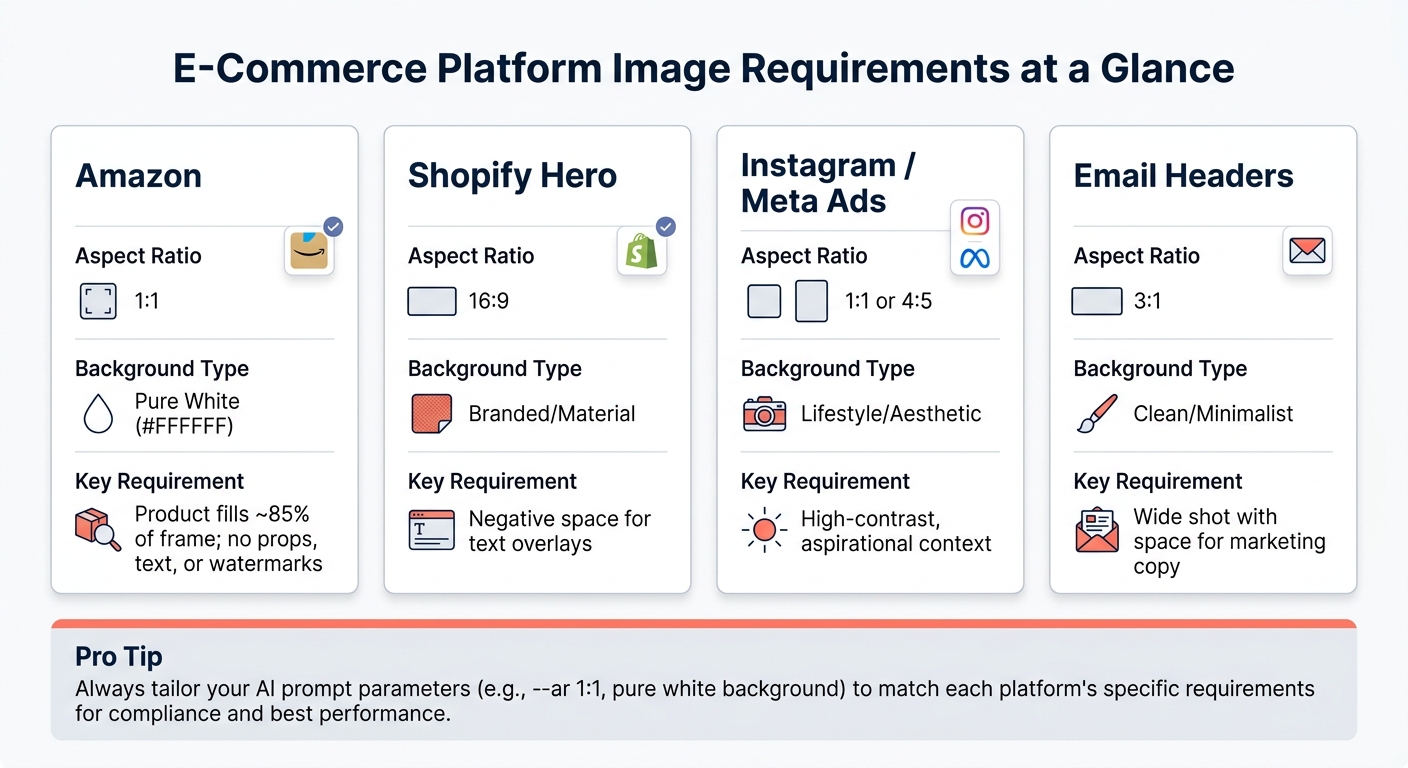
Each e-commerce platform enforces unique technical requirements, meaning prompts must be tailored accordingly. For instance, Amazon demands a pure white background (RGB 255, 255, 255) with the product occupying about 85% of the frame - props, text, and watermarks are prohibited [3][4]. Shopify hero banners, on the other hand, favor a 16:9 aspect ratio with negative space for overlaying marketing text. Instagram and Meta Ads thrive on 1:1 or 4:5 ratios with high-contrast lifestyle imagery to grab attention.
| Platform | Aspect Ratio | Background | Key Requirement |
|---|---|---|---|
| Amazon | 1:1 | Pure White (#FFFFFF) | Product fills ~85% of frame; no props [3] |
| Shopify Hero | 16:9 | Branded/Material | Negative space for text overlays [3] |
| Instagram/Meta Ads | 1:1 or 4:5 | Lifestyle/Aesthetic | High-contrast, aspirational context [3] |
| Email Headers | 3:1 | Clean/Minimalist | Wide shot with space for marketing copy [3] |
Staying updated on platform-specific rules ensures compliance and helps maintain a consistent and professional appearance.
Using Prompts to Keep Images Consistent
Consistency across an entire product catalog is where prompt packs become indispensable. A carefully crafted prompt standardizes key elements like camera angles (e.g., 85mm lens at eye level or 15 degrees elevated), lighting setups (soft-box with specular highlights), and background styles. This ensures all product images feel cohesive, even when introducing new SKUs with product mockups and branding packs [3][4].
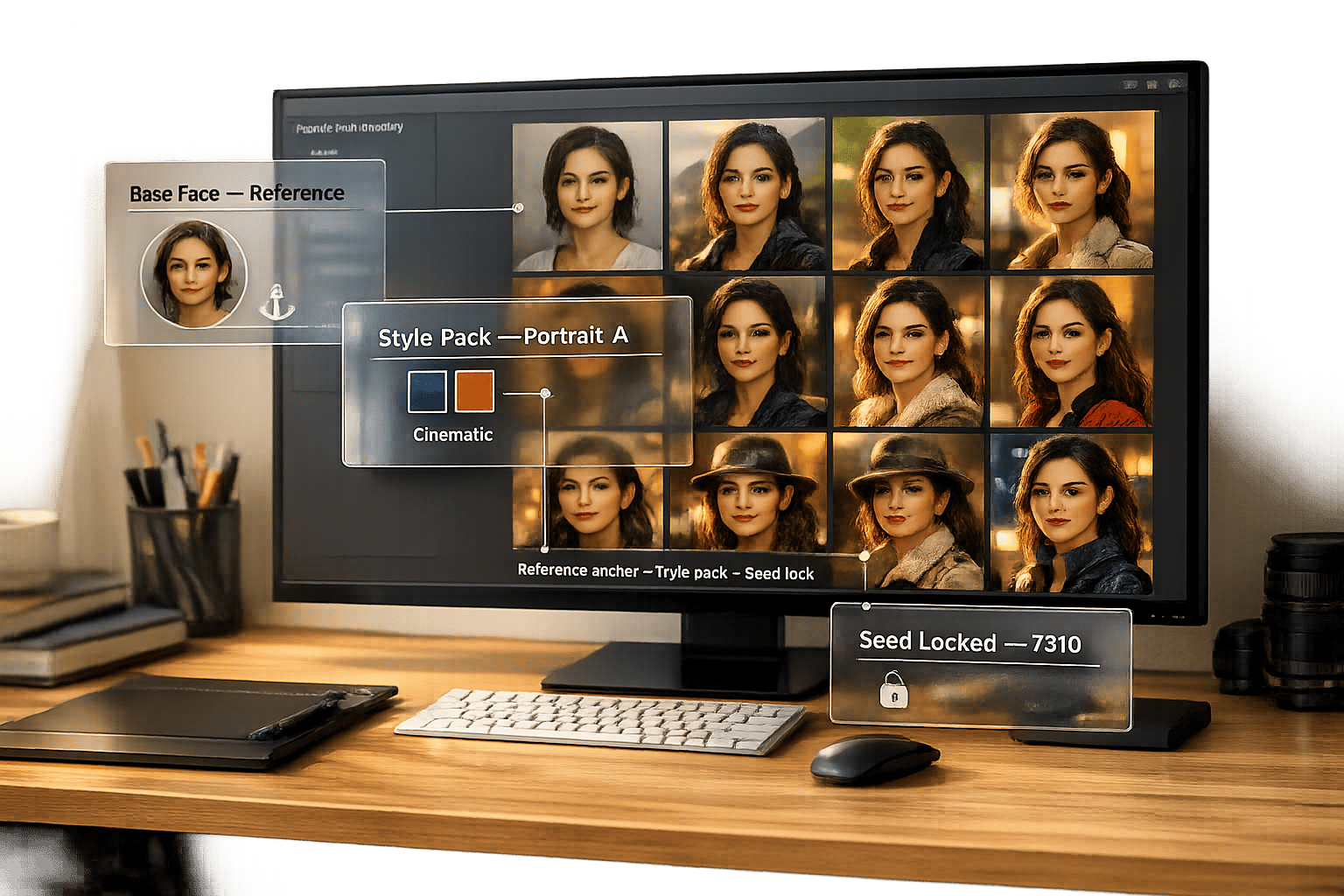
For batch production, tools like Midjourney allow the use of seed values to lock in specific lighting or model characteristics, ensuring uniformity across multiple images [4]. A strong prompt structure typically includes elements like image quality, a detailed subject description, scene context, technical specifications (lens, lighting), and the intended brand tone [3]. Prompt packs built around these principles save time and provide a reliable framework for generating consistent visuals.
sbb-itb-997826f
Types of Prompt Packs for E-Commerce Use Cases
Prompt packs tailored for e-commerce cover a range of needs, addressing specific channels and stages in the sales funnel. From product detail pages (PDPs) to social media campaigns, each type has a distinct role in enhancing visual content.
Product-Focused Packs
These packs are designed to meet the technical demands of PDPs and catalog images on platforms like Amazon, Shopify, and Etsy. They focus on elements like pure white backgrounds, precise frame fills, and sharp, detailed product visuals. Multi-angle coverage - showing front, back, side, and close-up views - can boost PDP conversion rates by 25–40% [3]. These features align with marketplace requirements and help maintain consistency across listings.
"The production quality of product images signals the quality of the brand. Low-quality product photography makes even good products look cheap." - Jay Kim, Writer [2]
For products like electronics or packaged goods, product photography-style packs often yield the cleanest results. Meanwhile, for luxury or beauty items, packs tailored to advanced models like Google Imagen 4 offer superior lighting and detail [4].
Lifestyle and Context Packs
Lifestyle packs excel at showcasing products in real-world settings, making them ideal for Meta Ads, Instagram posts, Shopify hero banners, and Pinterest. These prompts focus on creating a scene that enhances the product - like Scandinavian living room with morning window light or outdoor kitchen counter at golden hour - while using modifiers such as shallow depth of field and product as clear hero to keep the item in focus. When used with commercial AI art prompt packs, this approach helps establish an aspirational tone that resonates on social platforms.
In addition to standard product and lifestyle images, some packs specialize in seasonal campaigns or user-generated content (UGC) aesthetics.
Seasonal and UGC-Style Packs
Seasonal packs are perfect for refreshing visuals during key shopping events like holiday sales, back-to-school promotions, or summer campaigns. They use sensory details like warm amber candlelight and pine accents for winter or bright afternoon sunlight with sand texture for summer to evoke the right mood. On the other hand, UGC-style packs mimic the candid, relatable feel of user-generated content, incorporating modifiers like candid lifestyle, natural handheld framing, and attainable everyday setting. These styles often outperform polished studio images on platforms like TikTok and Reels.
Both seasonal and UGC-style packs still emphasize accurate product representation and visual consistency. Many brands now pair these packs with image-to-image workflows, using actual product photos as references so the AI can build scenes around them [2][4].
| Pack Type | Best Funnel Stage | Key Prompt Modifiers |
|---|---|---|
| Product-Focused (Packshot) | PDP / Catalog | White background, 85% frame fill, macro texture |
| Lifestyle / Context | Ads / Social / Hero Banners | Shallow depth of field, natural light, scene environment |
| Seasonal | Email / Landing Pages / Promos | Seasonal props, warm/cool lighting, themed backgrounds |
| UGC-Style | Paid Social / TikTok / Reels | Candid framing, natural lighting, "phone-shot" aesthetic |
Checklist for Picking E-Commerce-Ready Prompt Packs
When evaluating prompt packs for e-commerce use, focus on four key areas: clarity, consistency, negative prompt effectiveness, and documentation.
Clarity and Specificity
A strong prompt pack provides detailed, layered instructions that cover every aspect of the image. This includes the type of image, subject, setting, technical specifications, and brand tone - all in one prompt. Vague prompts often lead to unpredictable results. For instance, a detailed prompt like matte black stainless steel, 85mm lens at f/2.8, soft-box lighting from the left, pure white background ensures the AI generates precise outputs.
Additionally, check for platform-specific parameters. For example, Midjourney prompts might include --ar 1:1 for square marketplace listings or --ar 16:9 for hero banners. Low stylization values such as --s 20–40 also help maintain photorealism. Once you've assessed clarity, confirm that these settings are consistently applied across all products in the pack.
Consistency Across Products
Consistency is crucial for creating a unified look across a product line. Prompt packs should use the same technical settings (like lens, aperture, and lighting) for all SKUs. Seed values are particularly useful for maintaining consistent details across images. For brands with unique visual elements, look for packs that support reference image inputs to integrate those custom details seamlessly.
Negative Prompts and Defect Control
After clarity and consistency, focus on defect control. Effective prompt packs include negative prompts to filter out issues such as warped shapes, inconsistent shadows, blurred details, and stray logos or watermarks. This is especially important for products with glossy or reflective surfaces, like cosmetics, glassware, or electronics, where glare and reflections can easily disrupt the final output. Ensure the pack addresses these challenges, as uncontrolled highlights can detract from the professional appearance of product visuals. For high-end catalogs, using photorealistic Stable Diffusion prompts can further refine lighting and composition.
Documentation and Usability
Top-tier prompt packs come with detailed documentation, including model recommendations (e.g., Flux 2 for packaged goods or Google Imagen 4 for beauty and jewelry), suggested settings, and example outputs, such as those found in Midjourney style packs. These examples give you a clear idea of the results you can expect before generating images. A lack of example outputs or guidance is a warning sign, particularly if you're working with large product catalogs.
Where to Find E-Commerce Prompt Packs on Art Prompt HQ
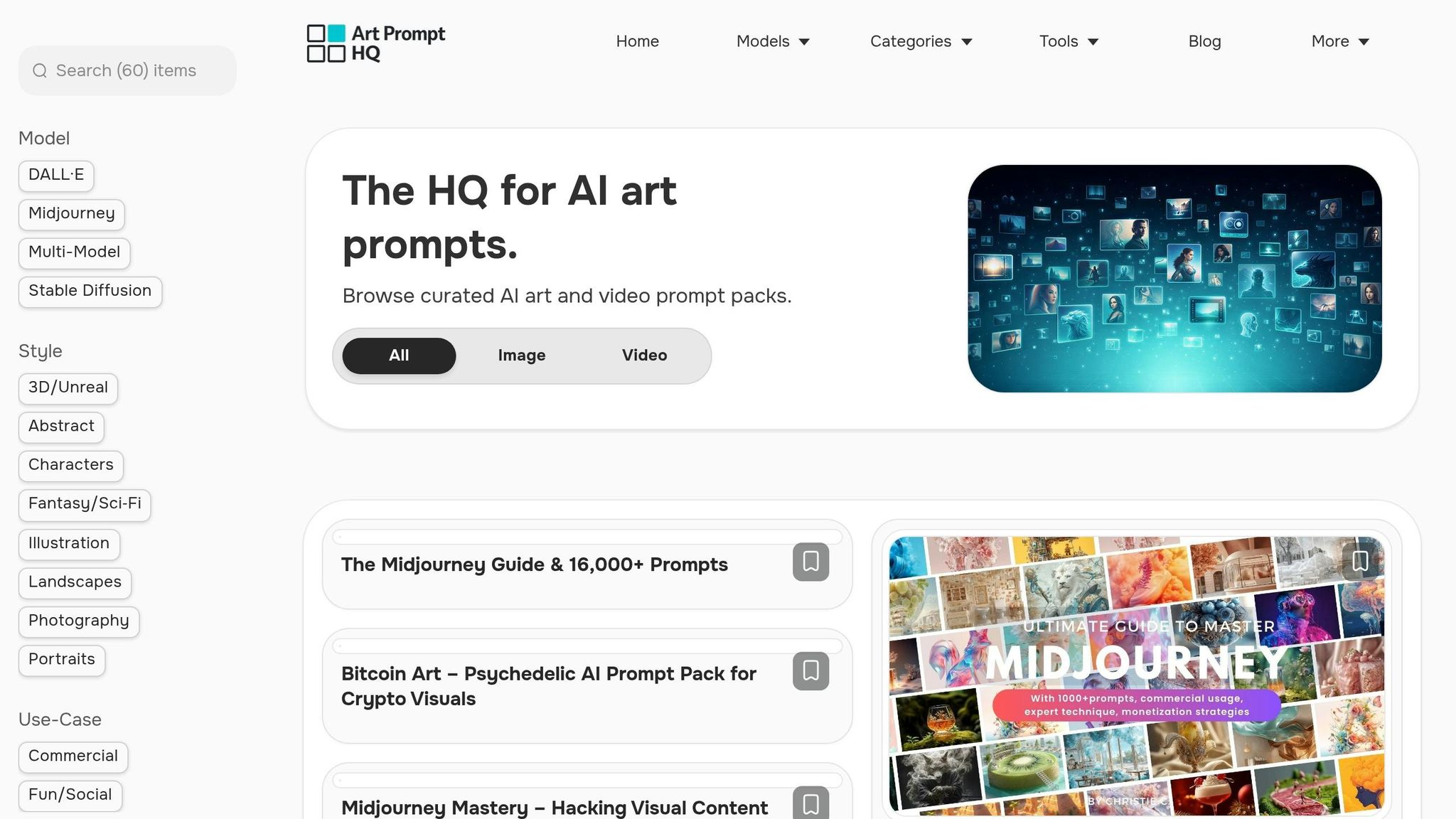
Art Prompt HQ categorizes its curated prompt packs by model, style, and purpose, making it easy to find options tailored to your e-commerce needs. Below are the main categories worth exploring.
Product Photography-Style Packs
If you’re looking to create polished product images, the Product Photography-Style Packs are a great place to start, or you can browse a multi-category prompt pack for broader creative needs. These packs focus on technical precision, offering prompts that include specific lens focal lengths, multi-angle shots, and clean, professional backgrounds. They’re ideal for generating Amazon-compliant hero images or Shopify catalog visuals. You can also filter by AI model - whether you’re working with Midjourney, Stable Diffusion, or DALL·E - to ensure compatibility.
Commercial AI Art Prompt Packs
For those in marketing or design, the Commercial AI Art Prompt Packs are tailored to deliver consistent, branded visuals. These packs include prompts for lifestyle imagery, seasonal campaigns, and social media formats like 4:5 for Instagram feeds or 9:16 for TikTok and Reels. As described on the site, these packs function as "Master Systems, commercial prompt packs, and monetization-focused guides that treat AI art as a professional skill - perfect for marketers, designers, and creators." [1]
Portfolio-Ready Packs
If you’re building a complete product catalog, the Portfolio-Ready Packs are designed to ensure visual consistency across all SKUs. These packs provide a cohesive framework for lighting, composition, and mood, making them invaluable for catalog-wide branding. Before choosing a pack, take advantage of Art Prompt HQ’s free tools like the AI Negative Prompt Generator to filter out defects such as stray logos or distorted shapes. Pair it with the AI Art Style Finder to pinpoint the right photography tokens for your project. You can also browse curated AI prompt packs for e-commerce or explore monetization strategies for digital artists if you’re incorporating AI visuals into a broader business plan.
FAQs
How do I keep AI product images true to the real item?
To keep AI-generated product images aligned with the real item, start by using actual product photos as reference inputs. Leverage editing tools for tasks like removing backgrounds or replacing scenes to ensure the image retains the correct shape, color, and details. Avoid creating images entirely from scratch, as this approach helps maintain a closer connection to the product's true appearance.
Which prompt pack type should I use for each sales channel?
When selecting prompt packs, it's important to match them to your sales channel:
- For product listings like those on Amazon or Shopify, go with white background packshots. These highlight essential details such as the product's shape, color, and features.
- For social media and ads, choose lifestyle or seasonal prompts. These create relatable, eye-catching visuals that resonate with audiences in real-world contexts.
- For email banners and landing pages, opt for branded prompts. These provide consistent imagery with room for text, making it easier to align visuals with your campaigns while maintaining clarity.
What settings ensure consistency across a product catalog?
Using seed values is a smart way to keep your product catalog visually consistent. By setting specific seeds, the AI model produces uniform visuals across multiple SKUs, ensuring your products are accurately represented while maintaining a cohesive brand appearance.